
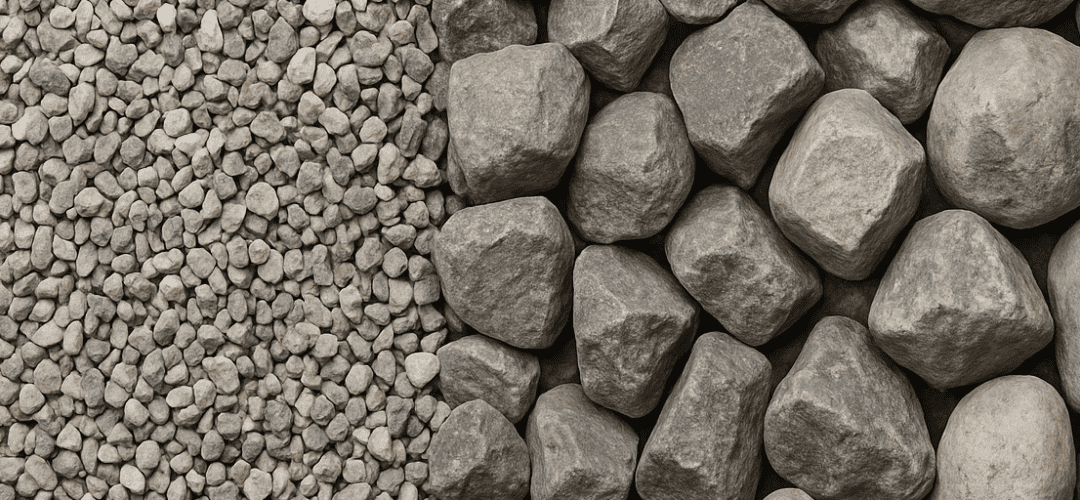
Aggregate materials are fundamental in construction and landscaping. Knowing the different grades and sizes available can help you make informed decisions for your projects, ensuring you choose the right materials for your needs.
1. What are the different grades of aggregates?
Aggregate grades are typically classified as coarse, fine, and a mix of both. Coarse aggregates include larger stones, while fine aggregates consist of smaller particles like sand. Understanding these classifications helps in selecting the right type for your project.
2. What sizes do aggregates come in?
Aggregates are available in various sizes, ranging from less than 5mm (fine aggregates) to over 20mm (coarse aggregates). Some common sizes include 10mm, 20mm, and 40mm, each suited for specific construction applications.
3. What is the purpose of different aggregate sizes?
Different aggregate sizes serve specific purposes, such as improving drainage, providing structural support, or enhancing aesthetics in landscaping. Choosing the right size ensures optimal performance for your construction needs.
4. How do I choose the right aggregate size for my project?
To choose the right aggregate size, consider the application, load-bearing requirements, and the type of material being used. For instance, 20mm aggregates are often used for concrete, while finer aggregates are better for plastering.
5. Are there standard specifications for aggregate grades?
Yes, aggregate grades are often specified according to industry standards, such as BS EN 12620 in the UK. These standards ensure consistency in quality and performance for various construction applications.
6. What is the difference between sharp sand and builder's sand?
Sharp sand, also known as coarse sand, has larger particles and is often used for concrete and block work. Builder’s sand, or soft sand, has finer particles and is typically used for plastering and bricklaying.
7. Can I use recycled aggregates?
Yes, recycled aggregates can be an eco-friendly alternative to natural aggregates. They are often used in lower-grade applications, such as sub-bases for roads and pavements, providing sustainability in construction.
8. What types of natural aggregates are available?
Natural aggregates include gravel, sand, crushed stone, and clay. Each type has unique properties and applications, making them suitable for various construction and landscaping projects.
9. What are the benefits of using larger aggregates?
Larger aggregates, such as those over 20mm, provide better drainage and stability in concrete mixes. They can also reduce shrinkage and improve the overall strength of the structure.
10. How do aggregate sizes affect concrete mix?
Aggregate sizes significantly impact the workability, strength, and durability of concrete mixes. Smaller aggregates can improve workability, while larger aggregates can enhance strength.
11. What is the role of fine aggregates in construction?
Fine aggregates, such as sand, fill the voids between coarse aggregates and contribute to the overall strength and stability of concrete, mortar, and plaster mixes.
12. Are there specific aggregate sizes for landscaping?
Yes, for landscaping, common aggregate sizes include 10mm and 20mm for decorative gravel, while finer aggregates like 4mm are used for pathways and as top dressing.
13. What grading system is used for aggregates?
The grading system for aggregates is typically based on the particle size distribution, measured through sieving. This ensures that the aggregates meet specific performance criteria.
14. Can I combine different aggregate sizes?
Combining different aggregate sizes can be beneficial, as it allows for better packing and improved stability. This technique is often used in concrete mixes for enhanced performance.
15. What is the impact of moisture on aggregate performance?
Moisture content can affect the performance of aggregates, influencing their weight and bonding characteristics in concrete. It’s essential to account for moisture when batching materials.
16. How do I store aggregates properly?
Aggregates should be stored in a dry, covered area to prevent contamination and moisture absorption. Keeping them separated by size also helps maintain their quality.
17. What are the common applications of 20mm aggregates?
20mm aggregates are commonly used in concrete production, sub-base layers for roads, and drainage applications. Their size provides a balance between strength and workability.
18. Is there a difference between gravel and crushed stone aggregates?
Yes, gravel is naturally occurring, while crushed stone is manufactured from larger rocks that are crushed to specific sizes. Crushed stone tends to have sharper edges, improving its interlocking properties.
19. How do I calculate the quantity of aggregates needed?
To calculate the quantity of aggregates, determine the volume of the area to be filled and then convert that volume into weight based on the density of the specific aggregate.
20. What are the environmental considerations for using aggregates?
Environmental considerations include the sourcing of aggregates, transportation emissions, and the potential for habitat disruption. Using recycled aggregates can mitigate some of these impacts.
21. Are there specific aggregates for drainage applications?
Yes, for drainage applications, larger aggregates like 20mm or 40mm gravel are often preferred, as they provide excellent flow rates and prevent clogging in drainage systems.
22. How does the grading of aggregates affect asphalt performance?
The grading affects asphalt performance by influencing its stability, durability, and resistance to deformation. Well-graded aggregates ensure better compaction and a smoother finish.
23. What is the importance of aggregate quality in construction?
High-quality aggregates are crucial for ensuring the strength, durability, and longevity of construction materials. Poor-quality aggregates can lead to structural failures and increased maintenance costs.
24. Where can I find more information on aggregates?
For more detailed information on aggregates and their applications, you can check out our dedicated page on aggregates here.
Have a question we haven't answered? Get in touch — we're happy to help.
Call us: +44 7749 988 589